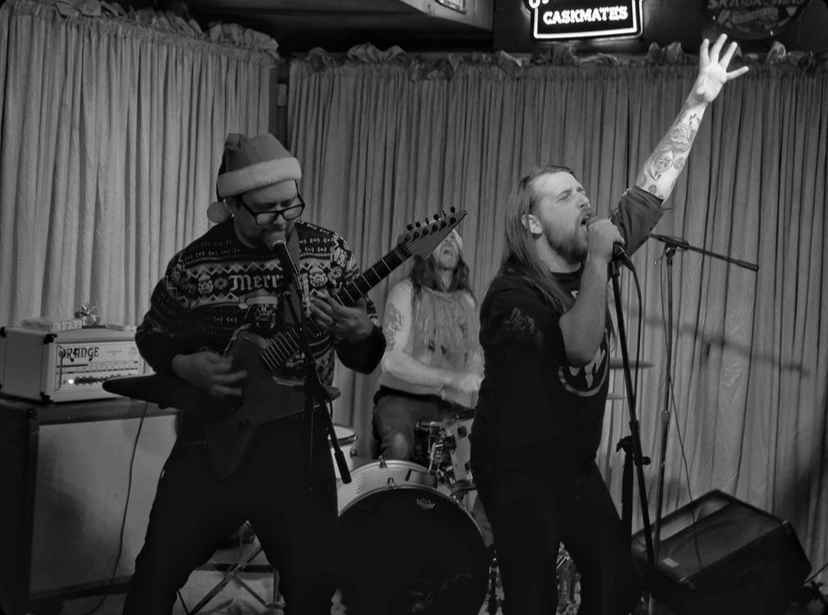
Bryan and Sean Ostrow of Flux Capacitor
The following interview with Bryan and Sean Ostrow of Flux Capacitor was conducted at What's Left Records in Colorado Springs on December 14th, 2021.
Eddie: So first of all, what was your guys' introduction to DIY?
Bryan: For me, I used to, I started going to- well, my real introduction to DIY was going up to shows at like, Blast-O-Mat, or like Rhinoceropolis. Shows like that, maybe three times a week, we would go to Denver all the time, and we were just kind of like, as I mentioned to you before, "This is so cool, why don't we have this down in town [Colorado Springs].
And I'd say before that, my real introduction to DIY would just be house shows. We used to do house shows at our houses, go to house shows, stuff like that.
Sean: Yeah, I would agree, it's the same thing, we used to go to house shows, my brother would host house shows, a long time ago when we lived out in Falcon. Then yeah, Blast-O-Mat was the first DIY, DIY I ever went to and it changed my life. And that was like my freshman year.
Eddie: So how old were you when you started doing the house shows?
Bryan: I started throwing house shows in '06, I graduated in '05, so I was about 19 when I started throwing house shows. And then we just kind of kept doing that, and then I would say about 2008 was when we started frequenting Blast-O-Mat. So that time I was probably about 20 / 21? And my brother was probably... I think you were still in high school when that was happening, right?
Sean: Yeah, I was like a freshman when my brother was doing his house shows, which were what I feel like was the first introductions. And then I was a senior, 2009(?) when I went to Blast-O-Mat for the first time. We saw Phobia, Phobia played there.
Bryan: Impaled.
Sean: Impaled, it was... it was really crazy, it was a mind blowing show, we'd never seen anything like it before, and it gave me a big introduction to that type of music and stuff too.
Eddie: Was that noticeably different from other shows you'd been to? Was there an experience at the DIY venues that was better, or different, than [commercial venues]?
Sean: Oh yeah, absolutely! What I love about DIY is the sense of community, and the sense of... you know it was different. Living in Colorado Springs has been kinda hard cause there's not a lot of shows. I mean there was shows, but we were having to book 'em all and do 'em all, so you know, there wasn't that big community and we didn't see as many people who were into that stuff, as us two [were] so it was a really big switch, it was really cool.
Bryan: And before, even before we started booking shows, when we were in high school, growing up doing shows, we would have to play at like, really crappy bars in town and where like, nobody really cared, or it was like pay-to-play venues. There was still cool places, but when we were first starting, it wasn't really easy to be in a young band or be in a band, there wasn't that sense of community. It was more "You're playing here to get us bar sales" and that's about it. So when we went to that [Blast-O-Mat] it was like "Oh, we don't have to sell tickets for this" or "Oh wait, we don't have to have a big album out for this, we can just do it ourselves" ya know? That's what it's all about.
Eddie: Gotcha. So you had experience booking shows, house shows, was that just local acts?
Bryan: Yeah, at Falcon Fest we did a 10 band show of a bunch of like local bands and stuff. We did local bands a lot, and did our own local shows, and then we started kind of touring a little bit and started meeting other bands, asking us for shows, and then I started a zine in 2010 called What's Left, before we did any of this [the What's Left record store in Colorado Springs], and through that, I would just ask bands like "Hey, do you want to play?" or do an interview, and that just made me realize, all you have to do is ask. And like somebody said, worst thing that happens is somebody'll say no, but chances are, you can get somebody to come and play here, and that's also how we started getting touring bands to come, is we would kinda see if a band was playing Albuquerque and then playing like Denver and had a day in between, we'd be like, "Hey! We can get you a cool show down here!" And we did some house shows, but we also started booking over at the Triple Nickel too. Which, I know I talk about bar venues and stuff, but I think the Nickel still has a very DIY aesthetic as far as the way shows run, and booking shows.
Eddie: Gotcha. So when you guys actually decided to start your own venue, what was that process like?
Bryan: Well, it was a thing that we always wanted to do, we always loved house shows, we always loved- I was booking a lot at the Nickel at that time too, and... it was just something that we always wanted to do, so we talked to our buddy Luke that ran this building that had like- I just asked him a while ago, "Do you know of any warehouses or anything?" and he said no. And then one day he said there was this big empty area in this building that has a bunch of practice spaces in it, and that we could try doin' it.
And so we did that and got like 8 of our friends and we all decided that we were gonna pitch this much a month, and then we'll maybe do a little bit from the door, but first and foremost, the door donations go to the bands. We wanted to make sure it was a place where bands were welcome and had a good time. So we let them stay there, we'd feed them food, if the door didn't do very well, we had a little fund, that usually went toward rent and stuff, that we would take out and give to the bands and stuff. So that's kinda why we wanted to start it, just to get a place for bands to be able to play. And for people in Colorado Springs of all ages to be able to come and enjoy music and see something they'd never really seen before.
Sean: Yeah, I think that's basically how it started, cause we were booking a lot of shows and doing stuff for a while but, ya know, always doing it at the bars and stuff [and they would be like] "We have a middle man" or [they'd] have us do other things, that was kind of difficult sometimes. And you know Hostile House was doing shows for a while, which was really cool and then that was kind of coming to an end. So we ended up being able to get this big building that was just awesome, so we could pretty much [book at].
Cause there were so many bands hitting us up, like all the time bands were hitting us up. So it was really cool to just have a space to be able to just strictly book for.
Bryan: Also, a big thing too that, just as you were saying that it reminded me, I was working at a health food store at the time, and this lady that I worked with, she was telling me about how her son's band, her son was in a band, and they were playing like, a show at this place called Sunshine Studios. And I was like, "I'm not really that into the way that place runs, and and certain venues and stuff like that, that does the Pay-to-Play and does stuff like that" and that they should play somewhere else. And she asked me, "Well, where else is there to play for a young band, that's like under 21?" and I thought and like... there really isn't [anywhere]. There's The Black Sheep, which is great and they take care of bands too but like, other than that, it's really hard.
So I wanted to have a place where younger bands could play, and learn how to do it like, the community way instead of, you know, having to sell tickets and instead of having to make this bar money, stuff like that.
Eddie: Awesome. So, you guys had mentioned that it served a few different purposes, like bands, if they were touring, they could stay there... did you guys have recording there?
Bryan: So we personally didn't have recording. So the whole building, and it's actually the same guy that runs this, this is the same building too, same kind of building, it's all practice spaces, all rehearsal studios. So that building, the whole building, there was probably about 20 / 30 rehearsal studios. So bands would just come in and rent it monthly and stuff. We didn't really have anything to do with that, but we were able to have a bunch of bands that were practicing upstairs come and play, and all that stuff. So I think there were some studios up there, we had a little green room up there. We did have mattresses so if the bands needed to stay, we'd clear up some disgusting, dirty mattresses and let them stay, "Make yourselves at home".
Sean: Yeah, we had mattresses, we'd do a lot of stuff-
Bryan: We also had art shows.
Sean: Yeah, we had art shows. We tried to do a lot of things. We just wanted to have a really nice, um... just a place that made you feel like home basically. Cause we got to tour, and we've toured Europe a couple times, and we toured Germany, and out there it's crazy. The hospitality is just out of this world. So we really wanted to have a place that kind of has those same ethics. If we had cool bands in, we'd try to make meals every once in a while. And then if bands needed to stay, we could do that as well. And then we had a little record store in there too. Even sometimes when bands would come in, we'd let them pick CD's for the road. Stuff like that, just tried to have a fun-
Bryan: We also had zines in there.
Sean: Yeah, we'd have a lot of zines and books and stuff to give to people. And we also had- the other thing that was cool about the space, cause we would have art shows, but we were kind of an art space as well, cause we knew a lot of artists who wanted just to have walls, to throw up their art and do stuff, so we got a lot of artists to come down and do like full murals in there. We even had some artists from Denver come down. So, yeah it was really cool.
Bryan: And also since we had like the little mini store in there too we'd make it so if you didn't have any money or any donation, or whatever, for the show, you could donate an old CD or book, or you know, something like that too.
Eddie: Well it seems like the ethic that you guys have, and had, with it, was that it's not just about one night showing up to see a band and then going back. That it's a whole culture...
Bryan: 100%. It's about meeting those bands and those people and going to where they live and this whole community, this network of, ya know- you take care of this really good band, and this cool band and then next time, we're in Arizona where they're from, they take care of us and it's just this network of meeting people and helping each other out.
Sean: And the whole building was really that whole ethos and it always was. And that's the thing that's kinda crazy cause we were building, even just outside of the bands, mainly just for the fans and the people out here and the community and the scene in the Springs. A lot of people just felt home there, no matter what show it was, if it was a rap show, if it was a death metal show, we welcomed all. We did a lot of different mixed genre shows all the time, just so everyone feels welcome. There was a lot of people who had depression problems, felt really crappy and they really felt like they could be at home and just be in a nice environment, to be able to have a safe place, to hang out and ya know, not be depressed and just be able to, you know, talk with people, hang out and they knew any night they come out, there's a show, there's gonna be a good crew.
Bryan: Exactly, and that's what it was all about, ya know, if you're feelin' down, come and have a place where you can be with people, like minded people, and you know... we gotcha, we got your back.
Eddie: That's so important, to counteract the individualistic stuff so people can feel more a part of something healthy, greater, bigger...
Bryan: Exactly, absolutely. We also never really charged a cover, we did donations, but we never turned anybody down if they didn't have anything. We just wanted 'em to come and have a good time, be with people.
Eddie: Would you say- maybe this isn't a totally fair question, cause you guys are inherently biased- but did you see a development in the quality, or amount, of the musicians in town? Or the bands and all of that? Was there like, since people could perform in this space, there were more bands or like...
Bryan: Oh yeah, there was a really amazing network of bands in town, that was awesome, things were amazing. They still are. That was also a reason we wanted to start a place like this too, cause there's so many good bands and stuff in Colorado Springs, and a lot of people think of us as just this town that's just military christian evangelical stuff, but there's this whole other counter-culture to that, that's saying "We're not gonna do it like that, that's not what we're all about" So we wanted to have a place where we could show how cool the music scene is out here and let people- let new bands come and play, and even if they weren't that good, let 'em come and play and see what it's like to play in front of a crowd and work out the chops to become a better band.
Sean: Yeah, there were so many bands all the time. Everyone would just come and ask, say "Hey, how do we play?"- just ask! That's all ya gotta do. Just ask to play and we'll book a show, do stuff. It's like brand new, a lot of people like, weren't in bands but they were in the scene hanging out, and we would always try to be like, just get people just to be like- "Start a band"- it's that easy. People got to network there, start bands and do stuff, and we knew, like, "You guys get five songs, six songs, we'll book you guys"- it's like just that easy. I feel like a lot of people don't want to play shows and have a hard time doing stuff, just because they think it's too hard to do shows, or anything like that. They don't know how easy it is. (Flux Capacitor) kind of made it cool and there was a lot of really cool bands out there.
Eddie: That's what's so cool to me about the venue aspect of things, is it's a place for everything to coalesce.
Bryan: Mmhmm, exactly, that's like super important, just to have a place where people, no matter what day of the week it is or whatever, no matter what kind of show it is, to coalesce and feel at home.
Eddie: The artists can hang up their stuff...
Bryan: Exactly.
Eddie: The musicians can play...
Bryan: Totally.
Eddie: The dancers can dance.
Bryan: Exactly! We used to do that a lot, we had like variety shows with that stuff too. It was good.
Eddie: So what years was Flux (Capacitor) running from?
Bryan: Flux was running from... I wanna say 2014-2016... or it was '13-'15. Cause we opened in December, so there's that weird cusp of if it was... I'm pretty sure it was December of '13 and then we got shut down in late December of '16 I think. Yeah.
Eddie: Gotcha. So when did [long pause] so... it ended in 2016- what happened?
Bryan: So, after the Ghost Ship fire happened- so it also could've be '15, I'll figure out the math on that, but um,
Sean: We gave you the right dates when we texted you.
Eddie: I think it's 2016 is when the fire happened.
Bryan: Alright, that's what I thought, exactly. And we were open for two full years and that happened.
Eddie: It was right after the election.
Bryan: Exactly.
Eddie: And then Ghost Ship.
Bryan: Exactly. And it was very Trumpy people trying to shut down these venues. So yeah, so that's what happened. When the Ghost Ship tragedy happened, and I do say tragedy because it's such a bummer what happened and it's terrible that people used something like that to... you know... you know, work in favor of their own politics, shutting places like this down. So yeah, that's what happened, we saw that Rhino shut down and then a couple days later we saw that like, "Oh it's comin' for us" and sure enough, we had like a note on the door from the fire department, saying "You can't resume doing this".
So I guess what happened was there was like this task force on 4Chan that was like everybody trying to shut down these venues. They said, "Here's your keywords, we need to get rid of these... liberal- hotspots for liberal radicalism" that's what they called 'em and they said, you know "Search keywords for queer, safe space, community, DIY-"
Eddie: Oh my god
Bryan: Yeah! They literally said that! And then they said, "When you find this place, call the fire department, act like you're nice and that you were just there, but that you're kind of concerned". So that's what happened, somebody came to a show or whatever, and they just called the fire department and acted, like they're like "Oh, I was at this show and... it's a really cool place, but uh, it just seemed like it was a little unsafe, so uh, I just wanted to let you know" And so then they [the Fire Department] came and did that [shut it down].
But then we saw that, people would send us screenshots of that group, and they had these photos of our venue, of how we're unsafe and one of them was literally a picture of clothing donations that we had for a Standing Rock benefit show that we did, like at the end of the night. So like using that and stuff.
So that's pretty much what happened. After that it kind of spiraled into a bunch of other things, where we still had a couple months worth of shows booked and we didn't wanted those people [Trump supporters] we didn't want them to win, so we were like "We're not canceling any of these shows, we're gonna just do 'em other places." So a bunch of other venues in town opened up their doors, we did stuff at the Black Sheep, at the Zodiac, at Bar K and at the Triple Nickel. The Black Sheep even let us keep it DIY fun vibe and let us do all floor shows there, when we were first doing it, they called 'em fuck shows. So we continued to do that.
We did a town hall style meeting with a bunch of people in the community about funding art spaces, and then the Pikes Peak Library District came and talked to us and was really into what we were doing, and had this building that they wanted us to collaborate on. And then through, you know, bureaucracy and everything, it just kinda... our ideas were a little bit different and it didn't really work out. But that didn't stop us, we continue to book shows everywhere, whenever we can.
So that's how that happened, sorry for the long weird answer.
Eddie: That was, that was perfect.
Sean: Yeah, but after that it was hard and kind of crazy with doing stuff, but a lot of people missed Flux like all the time, but the thing is like, the community was there, the shows were there, it was still happening, it was just different buildings. So it was kind of weird, but the venue (of Flux) was awesome. But everything that we were doing is still happening.
Bryan: Flux wasn't the building, it was the environment.
Sean: Right, Flux was the family, Flux was the environment.
Eddie: Gotcha, so it happened and... now it's still happening.
Bryan: It's still happening.
Eddie: It came to be, it was successful, I would say, and then...
Sean: The shows are still happening, we're still booking, we're still doing everything that we were doing before, we just don't have that building necessarily. We have a new spot that we throw shows in, every once in a while. Same little DIY thing, it's our practice spot.
Bryan: We're very cautious about it this time, so we're always like "Ask a punk", no address, we're very cautious about it.
And then, another thing I wanted to mention too, was, as opposed to Flux and DIY and what we were doing was, you can be DIY without it just being like a warehouse too, like it's just the mentality of how you do it, you can still do it at venues and stuff. Cause like, we, for four years, were doing this fest called 7-1-Grind and we booked that entirely ourselves, we had it entirely funded by local businesses, and we had like two or three days of like 70 bands, bands from Europe, from Brazil, from Venezuela, from all over the country and we started doing that at Flux and when Flux was shut down, we still did it for another two years, without Flux.
Eddie: So do you guys have a top three shows? From when you were running Flux?
Bryan: Crawl, was like absolutely incredible. It's funny, there were some huge shows that were absolutely amazing, like one of the 7-1-Grind's with like Capitalist Casualties and Weekend Nachos, that was like, absolutely incredible. Vowel played there, that was incredible.
But like, some of my favorite shows were ones that like, nobody was at. Sombre played, that was like, weird psychedelic, noise, kinda type stuff, ambient stuff. They were absolutely incredible. Crawl, was absolutely mind-blowing. And then Cheski, Cheski's one of my favorite artists, like folk-punk, hip-hop stuff.
Sean: Yeah, those one's were great, I mean definitely the 7-1-Grinds are up there, I got to see Thou in that little tiny room, that's actually one of my favorite shows I ever booked, we did a Thou matinee show. It was Thou, Heat Dust, my band, Alone, and this other band, Stress, played as well. And that was such a good show. It was a matinee show, so we played- cause that's one of my favorite bands, I've always wanted to book 'em, so I got to book then during the day and then they played at Rhino that night. It was a total sold out show, but we ended up getting in too. It was awesome, cause they played at Rhino with The Body that night, which was super awesome.
But, that show was really cool, I would say... um, we had Gift of Gab there, that was really awesome, Blackalicious played, that was something I would have never thought would happen. Blueprint played there.
Bryan: Milo, Milo was really cool.
Sean: There's just way too many to even think about.
Bryan: Scott Kelly from Neurosis played a thing with Bruce Lamont, that was really cool. Yeah, there was a bunch! (laughs)
Eddie: What about top three weirdest things that happened while you guys were there?
Bryan: Top three... excuse me?
Eddie: Top three weirdest things.
Bryan: (Laughs) Okay, One: there was this time where the toilet, there was this turd that was clogged in it like so hard, and we couldn't find a plunger or anything, so we had like a shovel. So I was grabbing a shovel, and I was like scooping this turd out of the toilet with a shovel, and I'm running outside, like flinging it, and I fling it over like into the ditch and that's right when this band was pulling up, this touring band. And I was like, "Welcome to Flux!" as I'm like, flinging a turd, ten feet in the air.
There was a time where, (turning to Sean) I'm sure you know what I'm going to talk about, there were these two hardcore bands that were playing. And, one of them was a touring band, actually, no, there were two touring bands that were playing separate tours, and one of 'em hopped on. And one of 'em was being really very rude, and just, pompous and stuff, the whole time they were there, and they were like, "We need to use your amps" and the other band was like "Yeah, you can use our amps, just run it at 4 ohms". So, the guy doesn't run it at 4 ohms, blows the speaker and the guy's like "Hey! Are you gonna fix my speaker?" and the guy's like "Shhh, yeah, I'll fix it, bring right here" and I'm like wrapping up cables and then this guy, lifts the entire amp, the entire cab, and he's walking out, and I'm like, "Do you need any help?" and he's like, "NOOO!" and he's like runnin' off. And then goes to the dude, and he like throws the amp at him, and he's like "FIX MY AMP!!" and then everybody just starts brawling, and then one of the bands just like throws all their trash out of the van and takes off. So that was- that happened, that was pretty crazy.
Also, a straight edge band playing while we were all smokin' weed and them getting mad and lighting off fire crackers.
So yeah, lot's of weird things.
(Turning to Sean) What about you?
Sean: You took the one I was gonna say (laughs). Yeah, craziest moments...
Bryan: Days in Daze
Sean: Oh yeah, Days in Days played there and that was just crazy. We didn't know of Days in Daze at that time, and that show just got so packed and there was like train-hopping crusties from everywhere and it was just such a wild show. God, it was really stinky in there. (laughs)
So that was crazy, we had a show once where, my friend was playing and like all these bands had to drop off the bill, it was such a pain, and my friend's band plays right before, and he breaks his bass, on the ground, and a piece went flying out and it hit his girlfriends foot, and it kind of hurt her foot a little bit, it didn't end of being that bad, but it was just such a shit show, so crazy. So then my band ended up playing right at the last minute.
So there's just always really weird stuff happening.
Bryan: Also I remember we did a, on the day- so we're called Flux Capacitor- so on the day, whatever day they actually go to the future, it was actually that day of that year, so after the show, we just had a Back to the Future party, where we just drank beer and had pizza and watched all three Back to the Future movies.
Sean: Yeah! We just had a little slumber party, kind of. Just threw down a bunch of mattresses and watched that old movie and the band Staghorn played before that too, and they were amazing.
Eddie: Awesome, so do you guys have any closing thoughts, on DIY or what helps make a successful spot, or...
Bryan: Yeah! So honestly, everybody asks how to do it and wants to do it, and this is the big thing, that it actually kind of bothers me, where, after Flux was shut down, everybody was like, "Aww, we need that again" "We need something again". Well, why do we have to be the ones to do it? You guys can do it, everybody else can do it. That's the big thing that I want to- We love doing it!- but like, it's time for other kids and people to like, find a warehouse, or, you know, throw a show in their living room. And that's the biggest suggestion that I think I would have for people wanting to start a DIY space, "Don't worry about the logistics of it, don't worry about how it's going to work, just do it, and I mean, it's not going to last forever, you're probably going to get shut down, but just do it as long as you can, and make it work while you can, just don't be afraid to do it, just do it" Like the Nike of DIY punk (laughs)
Sean: Yeah, yeah, I guess my closing thought with the whole thing is like, the whole DIY ethics is also DIT, it's Do It Together have a whole entire community, it's not all up to just one person. You know, you got a whole community, everyone can do this together, welcome people in, you know, talk to people, network. It's like, it's that easy, you know, people think it's like a really hard thing. Just talk to friends go to shows, meet people, start bands, book shows wherever, just talk to people and have a full community, and you know, everyone will support each other. That's how it goes, all friends, all homies, and all you got to do is really just reach out to people and hang out and you'll end up doing stuff if you're just a nice person.
Bryan: Yeah, just treat people with respect.
Sean: And it will go back to you, you know? The whole thing with us and DIY has been crazy, cause like we're in small little bands, played in bands forever, but we've gotten to tour Europe, we got to do all this stuff, just from networking, just from talking to people and doing little things. You don't have to be a huge rockstar to get big, just be cool, talk to people and experience music.
Eddie: Awesome you guys, thank you.


Comments
Post a Comment