Madeline Johnston, Syntax Physic Opera / Various
The following interview was conducted with Madeline Johnston of Midwife via email Wednesday, October 27th, 2021.
Q: What was your introduction to DIY and what appealed to you about it?
I think I was going to DIY shows before I really knew what that meant. Growing up in Santa Fe, there wasn’t a ton going on, especially for teenagers. We had a venue called Warehouse 21 where I went to my first DIY shows in middle school. The first show I saw was this amazing emo/scremo band called Kidcrash, they were our hometown heroes. Warehouse 21 was a non-profit teen arts center, but it was mostly organized by the youth, it was totally a DIY operation, looking back. There were touring bands and local bands. It was the first time in my life I had encountered this environment: I was intrigued and intimidated at the same time.
I think this is when I started paying attention to the older kids - I looked up to them, tried to be like them, and wanted to learn from them. I’m still doing that, but now I’m one of the older kids.
Warehouse 21 was where the idea of a “music scene” was introduced to me as a concept, but it made even more sense a few years later when the first Meow Wolf opened, which began as a tiny one room DIY gallery and show space. Me and my friends pretty much just went to every show, whatever kind of music it was. There were also events at a house called Meg’s House, an experimental music collective called High Mayhem, and shows at the bike coop called Chainbreaker. We saw bands like Andrew Jackson Jihad (AJJ) and Angel Olsen on some of their earliest tours…DIY bands of the golden era (early aughts) like Anavan, The Chinese Stars, Peachcake, Listener Project, The Mathematicians, Foot Ox, Stephen Steinbrink, and Monotonix…and local bands like The Apple Minor Colony, Ghostkimo, Initials B.R., Keyboard, The Big Boo, Yoda’s House…etc etc.

What appealed to me about this world was the music, first and foremost. I really started to develop my music taste surrounding the DIY scene, the music I was seeing became a part of my world. It was appealing to directly interface and interact with the music I was seeking out.
I was listening to local bands, getting excited about bands, looking forward to shows…basically, everything about it. I loved it from an early age. I may not have fully understood it all at first, but I fucking loved it regardless. It was appealing to be a part of something, to have some kind of role in it. To be influenced by and influence what I was experiencing; in real life, in real time.
Q: When did you start booking shows? / How?
I started playing and booking shows when I moved to Colorado in 2009. The first shows I booked were at my house in Wheat Ridge which we lovingly called “The Brothel.” This was my college house, and all of the shows I booked there naturally just turned into house parties.
I first fell into the Freeschool scene that centered around the R+R house. My first show in Denver was with Munster Boogie, You See this Gun, Calliope of the Future, and Fantard Magnus. I met these people busking on the 16th Street Mall, I guess this is how I started meeting folks in the scene. People were out and about more than they are now. A couple years later, I became friends with Hunter Dragon and we started playing and booking shows around town. We had a band called Year Of The Dragonfly, we also started a small run cassette label called Tinyamp Records. Through word of mouth, I started setting up shows for touring bands. I made contacts and booked at places like Deer Pile, Yellow Feather, Teahouse, Ironwood, The (old) Lost Lake, and Rhinoceropolis.

Booking shows expands your world. It gets easier the more you do it. The more relationships you nurture with bands and venues, the more it fulfills you in return. It’s a labor of love.
Q How did your identity as an artist play off your booking and place as a resource for others?
It’s about with building a network - you start to witness the interconnectedness of it all. The world becomes smaller, more reachable. When I began touring I was able to understand this, and see how my artistry fit into the larger context of the American underground. I feel valued by helping people, sharing the music I love with the people I love. That’s what it’s all about for me.
I think being a resource for others ultimately came back around to me, and helped established my role in the music scene. I also think creating my music projects in this setting influenced the kind of band I would become. It’s always been important to me to put the work in from the ground up, and build my sphere of influence.
It’s world building: The world feeds my art and my art feeds into the world. Its a cycle.

Q: Did Syntax have an initial philosophy about being involved with the more DIY elements / How did you maintain that?
Yes. This was the vision from the beginning. The owner, Jonathan Bitz, and I shared the same ethos, despite coming of age in different time periods of the Denver music scene. I think we subconsciously learned a lot from each other, and filled in the gaps. He taught me all about Colorado history, the music scene, and finding your identity in it’s context.
We wanted it to be this place that could still have the spark of magic, the experimentation, and spirit of a DIY venue, while at the same time being a more legitimate platform in order to elevate people’s artistic vision and give people a creative platform. The main concept was to value and respect our artists. This sounds really simple, but looking at the operation of some other clubs and venues, you quickly learn that this idea is often forgotten about, or not the first priority when it comes to booking shows.

My work with Syntax Physic Opera as the talent buyer was about place-making. I aimed to nurture the community by bringing the underground out of the underground, taking a chance on people; trusting people. We really wanted to curate a space where the reputation was — at Syntax, you know you will experience something weird and wonderful. You're gonna see something that will stay with you, and you’ll think about it long after it’s done. You might see something that’ll change your life. You might fall in love here. You can take risks here.
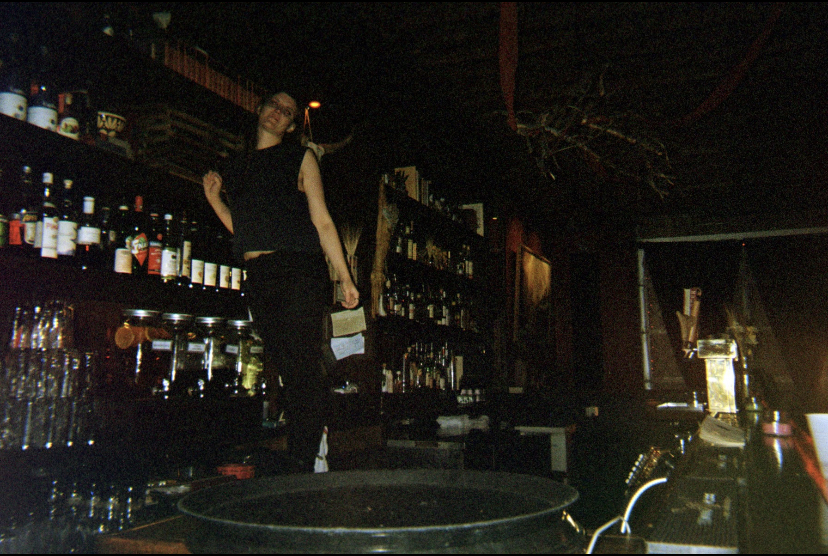
Syntax was basically a DIY space disguised as a bar.
The concept of Syntax was medicine. “Physic Opera,” means “Medicine show.”
Food as medicine. Drink as medicine. Art as medicine. Music as medicine.
A place for healing, growing, and experimentation. Not only as artists — but as people inhabiting a space, and being a part of a community.
Q: What was the parlay between Syntax and the underground venues? / Relationship to traditional bars and venues?
Syntax was a bit of both in my opinion. The way we ran our shows was that we gave the entire door money to the bands. As far as I know, we were pretty much the only bar in town to do this. It was in itself an act of protest against the Scott Campbell and AEG enterprise, etc. We didn't book shows to make money off of people, we booked shows as a way for bands to support themselves and have the opportunity to make money themselves. Why would we take a profit from their hard work? Artists are not seen as a commodity in the eyes of Syntax.

Syntax was open from 2014-2019. I was the first employee and stuck it out until the very end. Syntax was my baby. But I obviously didn’t do it alone. I worked alongside Jonathan Bitz and Zach Burke (who co-managed the bar with me and also booked shows). Zach and I definitely tried to bring the Rhinoceropolis scene out of the warehouse and into the bar.
During these years I also got to know pockets of the Denver music scene that I wouldn’t have otherwise known about. This was such a cool way to learn about the community and network with people playing all different kinds of music. My favorite part about working there was hosting the bands.
Some notable performances we hosted include Slim Cessna’s Auto Club, Snake Rattle Rattle Snake, Anklepants, David Liebe Hart, Clock DVA, Thou, Esme Patterson, Cloud Rat, Blood Incantation, Nathaniel Rateliff and The Night Sweats, Neyla Pekarek, Lingua Ignota, City Hunter, Pale Sun, Bright Channel, Primitive Man, and so, so many more.

We wanted it to feel like our house (because it was) and we were inviting people into our home.
My time at Syntax was the golden years of my 20’s, and I am so grateful to have had the opportunity to build this legacy alongside people I greatly admire. I will never forget it.


Comments
Post a Comment